
We tested 20 bone conduction headphones for 3 weeks to find the best models for 2026.
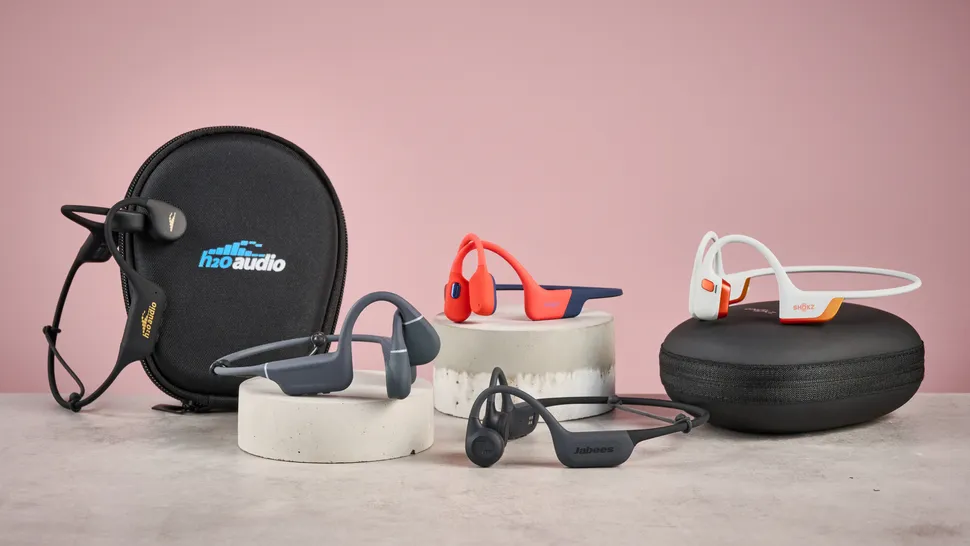
After years of ear pain from regular in-ear headphones, missed warning signals while outdoor running, and headphones that failed mid-swim or slipped out at the worst possible moment, we went in search of bone conduction headphones that truly deliver on their promises – ones that combine clear sound, all-day comfort, and the situational awareness that every athlete and commuter needs.
We tested 20 bone conduction headphones, including models from Audeon, H2O Audio, Shokz, Mojawa, and PSIER. The top five were evaluated according to the following criteria:
Sound quality & clarity
We evaluated bass resonance, vocal clarity and vibration management across various volume levels and listening environments.
Battery life & charging
We measured the actual playback time and how quickly each pair could be fully recharged – including fast charging performance.
Comfort & Sport Fit
We tested each pair while running, cycling and training, evaluating the stability of the frame, weight distribution and whether pressure built up behind the ears.
Water resistance & durability
We compared IP protection classes and real-world performance in sweat, rain and – where applicable – immersion in a pool.
After 3 weeks of practical tests and comparisons, we present to you the top 5 best bone conduction headphones for 2026.


OVERALL ANALYSIS
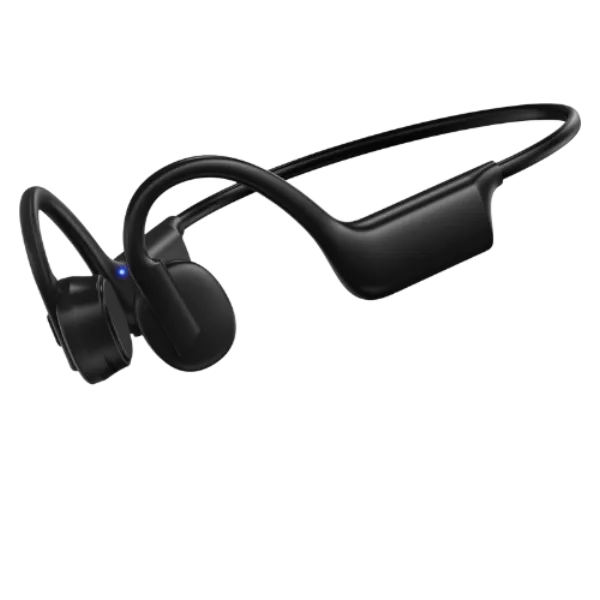
The EchoRidge Pro is the best open-ear bone conduction headphones we tested in 2026 — by a wide margin.
At the heart of the EchoRidge Pro is its advanced RidgeWave Bone Conduction Technology, designed to transmit clear, powerful sound through your cheekbones while keeping your ears completely open. In our testing, the EchoRidge Pro delivered noticeably deeper bass, clearer vocals, and more immersive audio than most bone conduction headphones in its price range — all without blocking out traffic, conversations, or your surroundings.
The lightweight titanium flex frame is equally impressive. It comfortably wraps around the head without creating excessive pressure and remains secure during running, cycling, workouts, and everyday commuting. The flexible construction also makes it easy to pack into a gym bag or backpack without worrying about damaging the frame.
With up to 10 hours of continuous playback, EchoRidge Pro easily handles long workouts, commutes, and full days away from a charger. Fast USB-C charging makes topping up the battery simple, while Bluetooth 5.3 connectivity delivers a fast, stable wireless connection with compatible smartphones, tablets, and laptops.
The built-in noise-reducing microphone was another standout feature. During calls in busy streets, gyms, and outdoor environments, voices remained clear and easy to understand, making EchoRidge Pro practical for much more than just music.
What impressed us most, however, is how naturally the EchoRidge Pro combines open-ear awareness with genuinely enjoyable sound quality. You can listen to music, podcasts, or calls while remaining aware of vehicles, cyclists, coworkers, and everything happening around you.
Backed by a 30-day money-back guarantee and free shipping, there’s very little risk in trying them for yourself. For runners, cyclists, gym-goers, commuters, and anyone who dislikes having earbuds inside their ears, EchoRidge Pro was our clear #1 bone conduction headphone pick for 2026.
Pros
- RidgeWave Acoustic Transfer Technology
- Titanium flex frame – designed for over 10,000 bends
- USB-C fast charging – full charge in 90 minutes
- IP55 sweat and rain resistant
- Completely open-ear – 100% situational awareness
- Free Shipping
- 40% more bass resonance than standard transducers
- 10 hours of continuous playback
- Bluetooth 5.3 with multi-device pairing
- Noise-canceling microphone for calls
- Zero ear fatigue – no in-ear or over-ear pressure
- Excellent Value For Money
Cons
- Often out of stock due to high demand
- Only available through the official website
CONCLUSION
The EchoRidge Pro has earned its place as the best open-ear bone conduction headphones of 2026. With advanced RidgeWave Bone Conduction Technology, a lightweight titanium flex frame, up to 10 hours of battery life, and Bluetooth 5.3 connectivity, it delivers an impressive combination of sound quality, comfort, durability, and situational awareness.
With free shipping and a 30-day money-back guarantee, there’s very little risk in trying them for yourself. If you want open-ear headphones that deliver clear, immersive audio while keeping you aware of everything happening around you, the EchoRidge Pro is our clear #1 choice.
2. Mojawa Aerra
OVERALL ANALYSIS
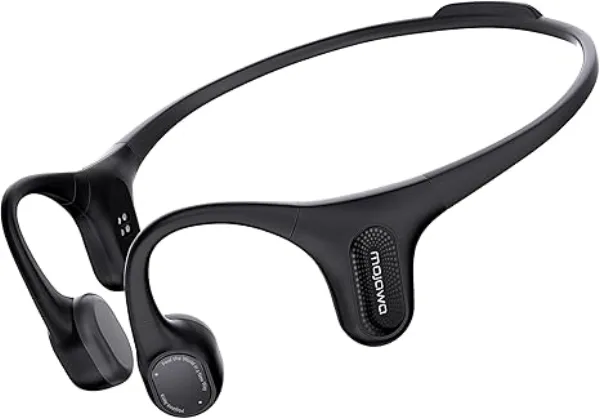
The Mojawa Aerra is a newer contender that exceeds its price tag in several areas. Its IP67 rating offers better water resistance than the Shokz OpenRun Pro, and its Active ENC microphone effectively filters out gym noise and wind during calls. Three audio modes—equalizer, bass boost, and vocal enhancement—provide useful flexibility, and the 5-minute quick charge that delivers 1.5 hours of playback is competitive.
As a newer brand without the track record of Shokz or H2O Audio, Mojawa doesn’t yet have the necessary depth of reviews to fully confirm its long-term reliability. The audio quality is solid for the price, but doesn’t reach the level of the top models in this comparison. A capable and affordable option for casual runners and gym users.
Pros
- IP67 water resistance
- Three audio modes for different listening preferences
- Dual silicone microphones
- Active ENC noise cancellation on the microphone
- 5-minute fast charging
Cons
- Limited brand history and valuation depth
- Expensive
3. H2O Audio TRI 2 PRO
OVERALL ANALYSIS
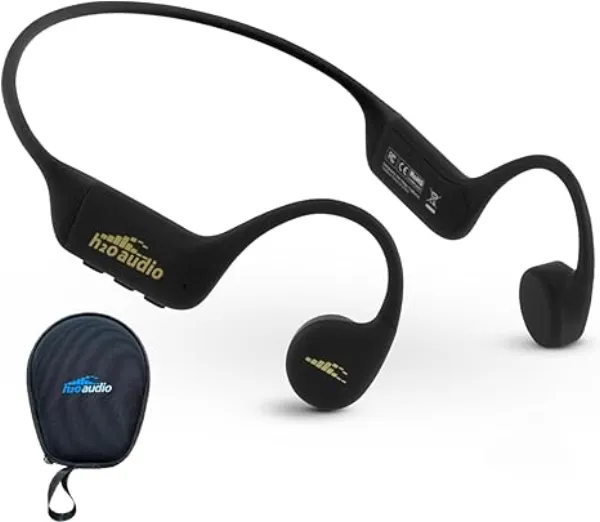
The H2O Audio TRI 2 PRO is specifically designed for multi-sport use, with water at its core. Its IPX8 rating allows for full immersion up to 3.7 meters for an unlimited time – making it one of the few bone conduction headphones that truly work underwater. The built-in 8GB MP3 mode, paired with the PLAYLIST+ app, gives swimmers access to offline music without having to download tracks beforehand – a clever and genuinely useful feature for pool workouts.
The battery lasts 8.5 hours with mixed use and takes about 2 hours to fully charge via USB-C. At 36g and with a 4.69/5 star rating from over 140 verified reviews, it’s a well-built and popular product. The price premium is steep and for land-based or everyday use, the EchoRidge Pro offers a more versatile and cost-effective experience at roughly half the price.
Pros
- IPX8 – submersible up to 3.7 meters
- 8GB integrated MP3 mode for underwater use
- PLAYLIST+ Offline music without download
- Bluetooth 5.3
Cons
- High price
- Shorter battery life than top competitors
4. Shokz OpenRun Pro
OVERALL ANALYSIS
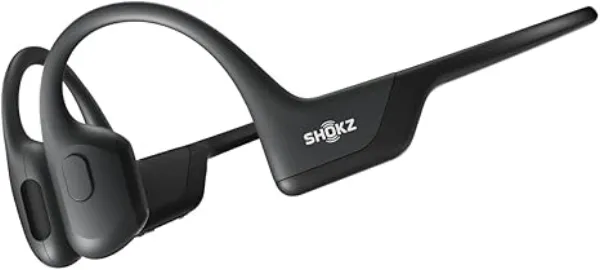
The Shokz OpenRun Pro remains one of the most recognizable names in bone conduction headphones. Its PremiumPitch 2.0+ technology improves bass response compared to the standard OpenRun model, and its 5-minute quick charge, which provides 1.5 hours of additional playback, is top-of-the-line. Weighing in at just 29g, it’s lightweight, and the Shokz app allows for EQ adjustments and device management.
it’s one of the most expensive options in this comparison, and its IP55 rating means it can withstand sweat and rain but isn’t submersible—a significant limitation for swimmers. Shokz has since released the OpenRun Pro 2 with a 12-hour battery and DualPitch upgrades, somewhat reducing the value proposition for this original version. For runners and cyclists who don’t require underwater use and are loyal to the Shokz brand, it remains a solid performer.
Pros
- PremiumPitch 2.0+ enhanced bass
- Ultralight at 29g
- Dual microphone
- 5-minute fast charge – 1.5 hours playback
Cons
- IP55 only – not submersible
- Premium price for older technology
- Replaced by OpenRun Pro 2
5. PSIER Dual Driver Bone Conduction
OVERALL ANALYSIS
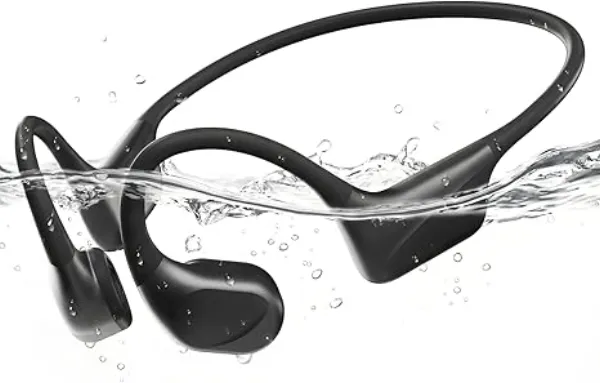
The PSIER stands out with its hybrid dual-driver system – combining bone conduction and air conduction transducers in a single device and promising over 30% more bass than standard bone conduction. Its 32GB of internal storage and IPX8 water resistance make it an attractive option for swimmers, and Bluetooth 6.0 offers the lowest latency of any headphones in this comparison.
However, PSIER is a largely unknown brand with minimal verified user reviews, and the real-world audio improvement of the dual-driver setup didn’t quite live up to the marketing claims in our tests. The magnetic charging cable is inconvenient compared to the USB-C standard used by top competitors. Interesting technology, but reliability and brand support remain unproven.
Pros
- Hybrid bone + air conduction dual driver
- 32GB internal storage for phone-free use
- Open-ear design with full perception
Cons
- Unknown brand with limited review history
- Dual-driver audio promises exaggerate real performance
- Magnetic charging cable – no USB-C
WHAT IS A bone conduction headphone?
Bone conduction headphones transmit sound via vibrations in your cheekbones directly to the inner ear, completely bypassing the ear canal. This open-ear design allows you to listen to music or calls while remaining fully aware of your surroundings – traffic, voices, and ambient sounds remain clearly audible. Originally developed for military and hearing aid applications, bone conduction headphones are now popular with runners, cyclists, swimmers, and commuters who prioritize safety and comfort over isolation.
Advantages of bone conduction headphones
- Full situational awareness – you hear traffic and surroundings while listening.
- Zero ear fatigue – no pressure in or above the ears
- Safe for outdoor running, cycling and commuting
- Most models are sweat- and rain-resistant for use in sports.
- Compatible with hearing aids for users with specific hearing needs
What you should consider when choosing the best bone conduction headphones
Waterproofing
Battery life and charging speed
Sound quality expectations
Frame comfort and weight
Connectivity and Pairing
What you should avoid when choosing bone conduction headphones
Excessive vibration at high volume
IP protection classes below your activity requirements
Heavy or inflexible frames
Copyright © 2026 All Rights Reserved.
The listings featured on this site are from companies from which this site receives compensation. This influences where, how and in what order such listings appear on this site.
Designed to help users make confident decisions online, this website contains information about a wide range of products and services. Certain details, including but not limited to prices and special offers, are provided to us directly from our partners and are dynamic and subject to change at any time without prior notice. Though based on meticulous research, the information we share does not constitute legal or professional advice or forecast, and should not be treated as such.
Reproduction in whole or in part is strictly prohibited.
As an Amazon Associate we earn from qualifying purchases.