
We Tested 24 Digital Breathalysers Over the Past 3 Weeks to Find the Most Reliable Option of 2026.
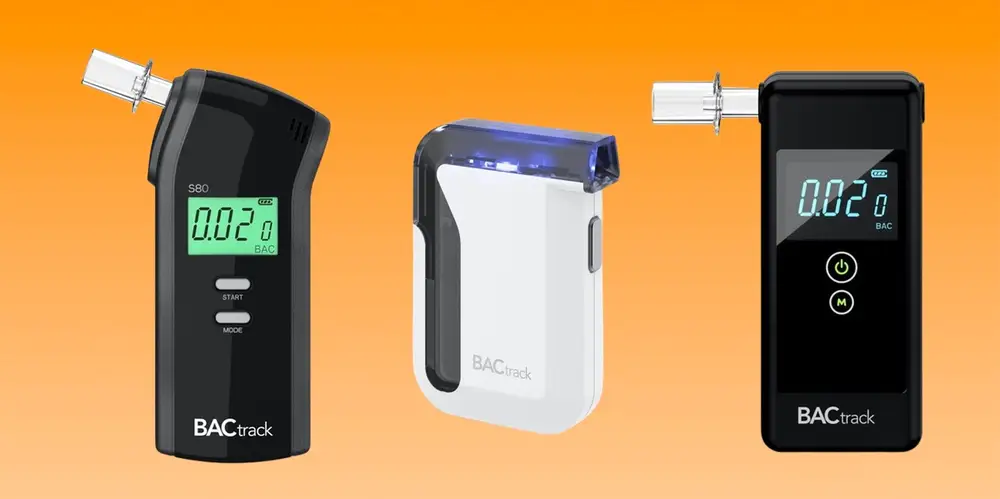
A high-quality digital breathalyser is essential for quickly checking your estimated blood alcohol concentration (BAC) and making more informed decisions after drinking. Many breathalysers promise fast readings, professional-level accuracy, and simple operation, but finding a model that actually delivers consistent results, clear readings, and dependable performance — without complicated controls, slow testing, or inconsistent measurements — can be a challenge.
We tested 24 digital breathalysers, including models from BACtrack, AlcoSense, Dräger, AlcoDigital and other popular brands. The top 5 were evaluated based on the following criteria:
Accuracy & Consistency
A breathalyser should provide reliable and consistent BAC readings. We compared sensor performance and repeated test results to identify models capable of delivering dependable measurements with minimal variation.
Testing Speed
When checking your BAC, you shouldn’t have to wait around for a result. We evaluated warm-up and testing times to find breathalysers that provide clear readings quickly and conveniently.
Ease of Use & Display
A good breathalyser should be simple enough for anyone to operate. We tested button controls, mouthpiece installation, LCD readability, and overall usability to determine which devices offered the smoothest testing experience.
Battery Life & Recharging
Portable breathalysers need dependable battery performance. We compared battery capacity, charging convenience, and the number of tests available between charges, giving preference to rechargeable models that are easy to keep ready for use.
Portability & Practicality
A personal breathalyser should be compact enough to keep in your car, bag, or pocket whenever needed. We compared size, durability, mouthpiece design, and overall portability to find models that are practical for everyday use.
After three weeks of testing, we present the five best digital breathalysers that truly live up to expectations.

With 22 years of experience in consumer technology, Robert knows what separates a reliable breathalyser from an inconsistent one. In this review, he tested several digital breathalysers to find the most accurate, dependable, and easy-to-use models.

OVERALL ANALYSIS
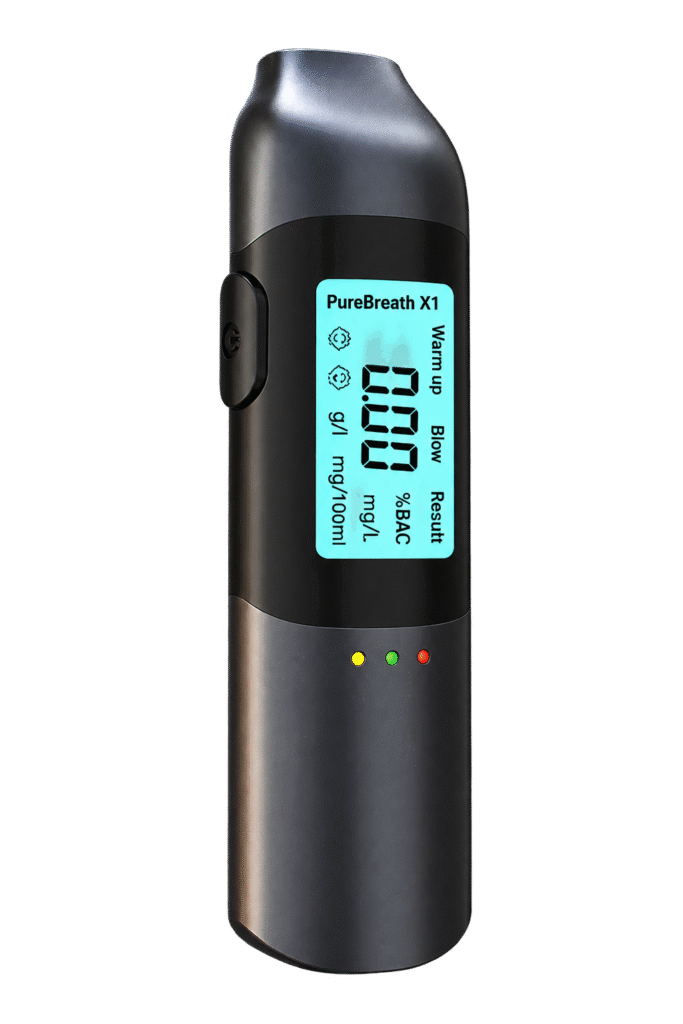
PureBreath X1 Digital Breathalyser is by far our favorite choice on the market.
The first thing that makes it stand out is its professional-grade alcohol sensor, designed to provide fast and consistent BAC estimates with accuracy rated to ±0.005%. Compared with cheaper breathalysers that can produce inconsistent results, PureBreath X1 feels far more dependable for personal testing.
What impressed us most, though, is the speed. PureBreath X1 provides a reading in around 5 seconds, so there’s no lengthy testing process or complicated setup.
The clear LCD display makes results easy to read, while the simple controls mean you can perform a test without navigating confusing menus or settings.
Another major advantage is its USB-C rechargeable battery. A full charge can support up to 100 tests, eliminating the hassle and expense of constantly replacing disposable batteries.
PureBreath X1 also includes disposable hygienic mouthpieces, making it much more practical when the device is used by multiple people.
Its compact, lightweight design is another big plus. It fits easily inside a pocket, glove compartment, backpack, or travel bag, so you can conveniently keep it with you when needed.
Overall, PureBreath X1 combines fast 5-second readings, a high-accuracy sensor, simple operation, USB-C charging, hygienic mouthpieces, and excellent portability in one compact device. For anyone looking for a convenient personal breathalyser, it was easily one of our top choices.
Pros
- Professional-grade alcohol sensor
- Fast 5-second BAC readings
- Accuracy rated to ±0.005%
- Clear, easy-to-read LCD display
- Simple one-button operation
- USB-C rechargeable design
- Up to 100 tests per charge
- Compact and highly portable
- Hygienic disposable mouthpieces
- Easy to carry in a car, bag, or pocket
- Quick warm-up and testing process
- Reusable for repeated personal testing
Cons
- Often out of stock due to high demand
- Only available through the official website
CONCLUSION
PureBreath X1 Digital Breathalyser is reasonably priced for a premium personal breathalyser packed with advanced technology, fast 5-second BAC readings, ±0.005% accuracy, a clear digital display, and USB-C recharging. Take advantage of the limited-time discount while supplies last.
PureBreath X1 also offers a 30-day money-back guarantee and free shipping, giving you extra peace of mind when ordering.
With its combination of fast testing, dependable sensor performance, simple operation, long battery life, and compact portability, PureBreath X1 was our clear choice for the best digital breathalyser of 2026.
2.BACtrack Breathalyzer
OVERALL ANALYSIS
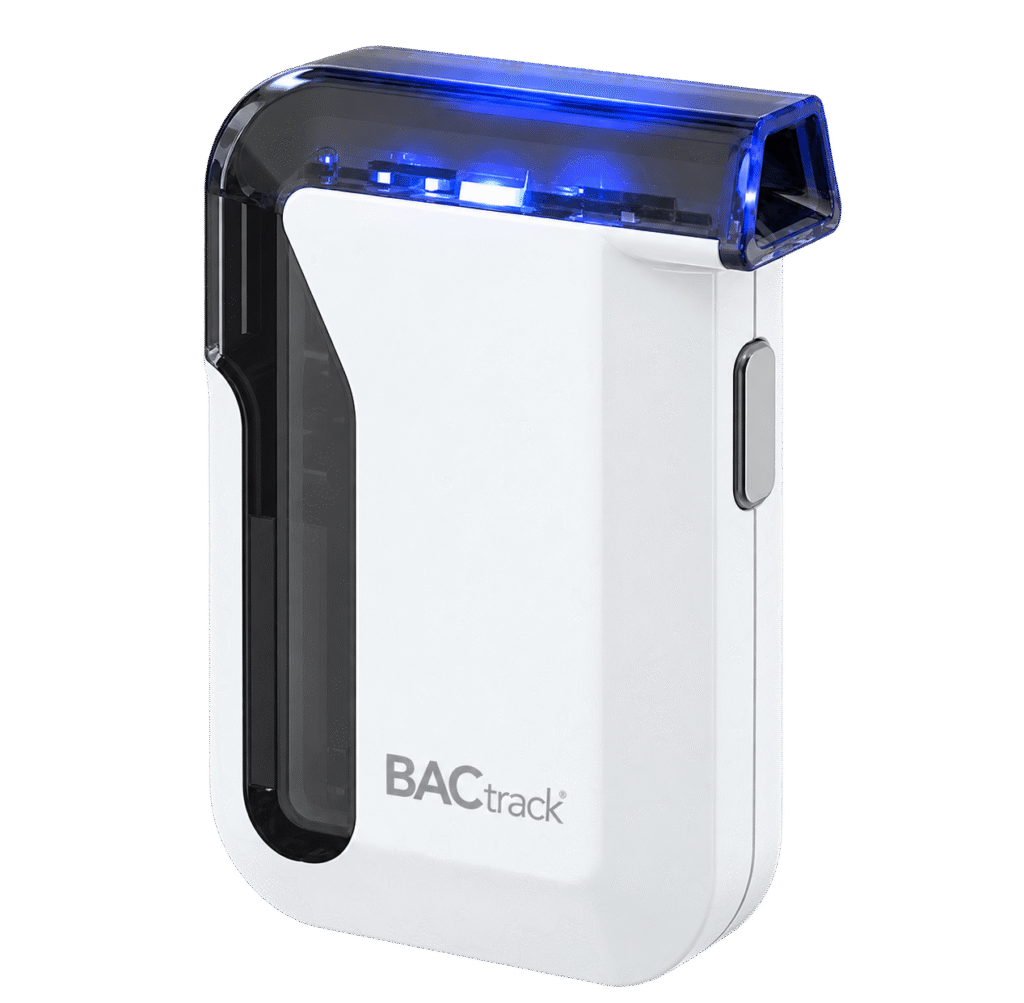
The BACtrack Mobile Smartphone Breathalyzer is designed for people who want detailed BAC tracking through their phone rather than a traditional standalone tester. It uses an Xtend® electrochemical fuel-cell sensor and connects to iOS and Android devices through Bluetooth. We found the testing process reliable and the compact design easy to carry, although needing a smartphone for every test makes it slightly less convenient than models with a built-in display.
The BACtrack app is central to the experience. Here you can view your BAC reading, keep track of previous results, and use the ZeroLine® feature, which estimates how long it may take for your BAC to return to 0.00%. The rechargeable battery and included mouthpieces also make it practical for regular personal use.
Accuracy and sensor quality are strong, but the BACtrack Mobile still uses Micro-USB charging and relies heavily on the companion app. There are simpler breathalysers available that provide results directly on the device, but if smartphone connectivity and detailed BAC tracking are important to you, the BACtrack Mobile remains one of the better premium options we tested.
Pros
- ±0.005 BAC accuracy at 0.050% BAC
- Bluetooth connection to iOS and Android
- Professional-grade Xtend® fuel-cell sensor
- ZeroLine® estimates when BAC may return to 0.00%
- Compact, lightweight and rechargeable
Cons
- Requires a smartphone and BACtrack app to view results
- Uses older Micro-USB charging instead of USB-C
3. BACtrack C6 Keychain Breathalyzer
OVERALL ANALYSIS
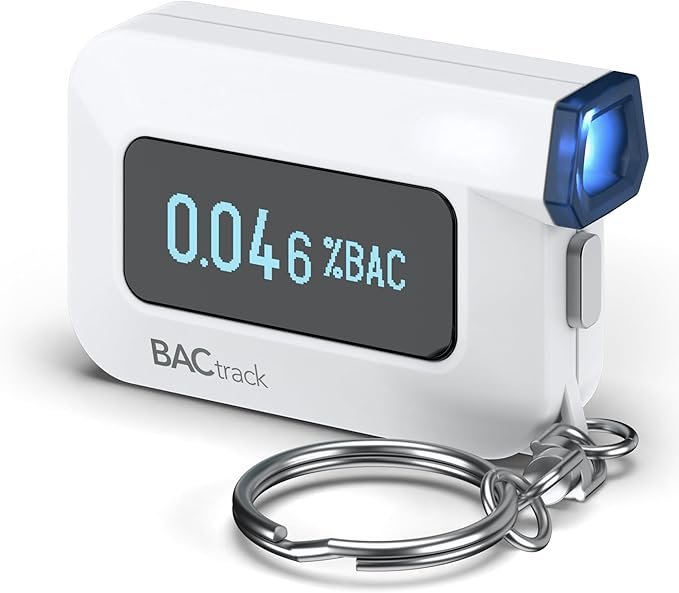
The BACtrack C6 Keychain Breathalyzer is designed for people who want reliable BAC testing in an extremely compact device. It uses a BluFire® fuel-cell sensor and can work either independently or with a smartphone, which gives it more flexibility than many app-only breathalysers.
One of its biggest advantages is portability. The C6 is small enough to attach to your keys, yet it still includes a built-in OLED display, so you can check your result without reaching for your phone. Connecting it to the BACtrack app unlocks additional features such as result tracking and ZeroLine®, which estimates when your BAC may return to 0.00%.
The main drawback is that it uses a replaceable AAA battery rather than modern USB-C charging, and the warm-up process is slightly slower than some newer devices. Overall, the BACtrack C6 offers strong sensor technology and excellent portability, but we found PureBreath X1 more convenient for everyday use thanks to its rechargeable design, larger display, and simpler testing experience.
Pros
- Professional-grade BluFire® fuel-cell sensor
- Works in both standalone and smartphone modes
- Compact keychain-sized design
- Well Rated by Users (4.4★)
Cons
- Uses a replaceable AAA battery instead of USB-C charging
- Around 10-second warm-up time
- Advanced features require the companion app
4. Alcosense ALS-Verity
OVERALL ANALYSIS
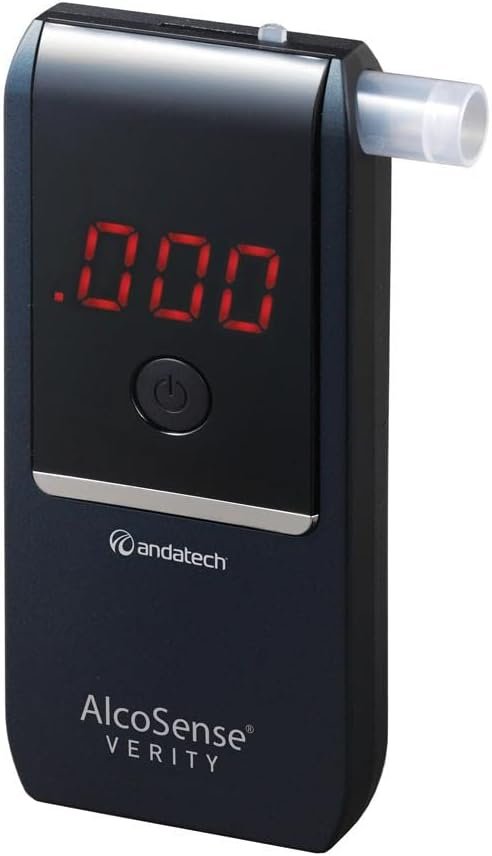
The AlcoSense Verity is a premium personal breathalyser designed for users who value dependable sensor technology and straightforward operation. It uses a fuel-cell sensor with accuracy rated at ±0.005% BAC at 0.050% BAC, and its Australian Standard AS3547 certification gives it an advantage over many inexpensive consumer models.
One feature we particularly liked is the built-in retractable mouthpiece, which makes personal testing quick and convenient. Additional mouthpieces can also be attached when the device is being shared. The Verity can store the last 10 test results and includes a calibration reminder, making it easier to keep track of both readings and maintenance.
The main drawbacks are its reliance on AAA batteries and the need for recalibration approximately every 12 months. Its response time can also reach around 10 seconds, so it does not feel quite as quick or modern as newer rechargeable options.
Overall, the AlcoSense Verity offers strong accuracy, a quality fuel-cell sensor, and useful result-memory features, but its higher price, replaceable batteries, and ongoing calibration requirements place it behind our top three choices.
Pros
- Platinum fuel-cell sensor
- ±0.005% BAC accuracy at 0.050% BAC
- Stores the last 10 test results
- Built-in retractable mouthpiece
Cons
- Requires 2 AAA batteries instead of USB-C charging
- Needs professional recalibration every 12 months
- Results can take up to 10 seconds
5. BACtrack S80 Breathalyzer
OVERALL ANALYSIS
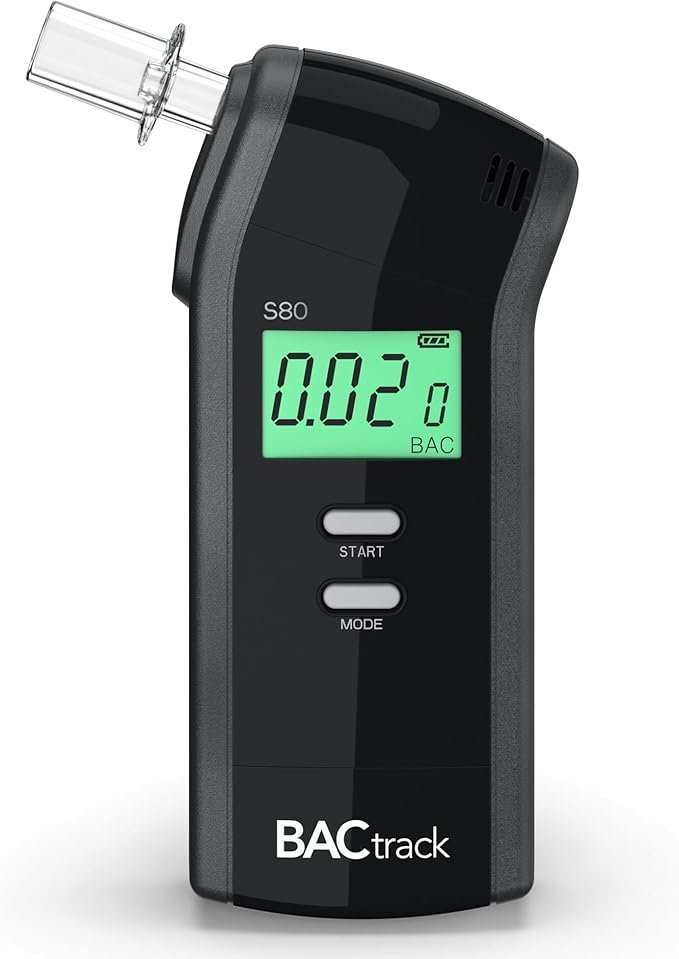
The BACtrack S80 Professional Breathalyzer is built for users who prioritize sensor accuracy and consistency over smart features. It uses BACtrack’s Xtend® electrochemical fuel-cell sensor together with an internal breath pump, helping it collect a controlled breath sample and produce dependable BAC estimates.
We found the S80 particularly easy to operate. It uses a straightforward one-button testing process and displays results on a clear LCD screen, so there is no need to connect a smartphone or navigate through an app. It is also capable of approximately 1,500 tests on one set of AA batteries, which is impressive for frequent use.
The main downside is that the overall design feels somewhat dated compared with newer rechargeable breathalysers. It relies on AA batteries, has no app connectivity, and warm-up can take between 10 and 30 seconds depending on previous use.
Overall, the BACtrack S80 delivers excellent fuel-cell sensor technology and straightforward operation, making it a dependable fifth-place option. However, users looking for a more modern, compact device with USB-C charging and faster everyday testing may prefer PureBreath X1.
Pros
- Excellent battery life of up to 1,500 tests
- Professional-grade Xtend® fuel-cell sensor
Cons
- Uses 2 AA batteries instead of USB-C charging
- Warm-up can take 10–30 seconds
- No Bluetooth or smartphone connectivity
WHAT IS A Digital Breathalyser?
A digital breathalyser is a portable electronic device designed to estimate your blood alcohol concentration (BAC) by analysing a breath sample. Personal breathalysers can provide a quick indication of alcohol levels, helping users better understand their BAC before making responsible decisions.
Benefits of a Digital Breathalyser
- Provides Fast BAC Readings
- Helps You Better Understand Your Alcohol Level
- Compact & Easy to Carry
- Simple One-Button Testing
- Clear Digital Display
- Reusable with Replaceable Mouthpieces
- Convenient for Home or Travel
- Rechargeable & Easy to Use
Things to Look for When Choosing the Best Digital Breathalyser
High-Accuracy Sensor
Accuracy should always be the top priority when choosing a breathalyser. Look for a high-quality sensor that delivers consistent BAC readings with minimal variation between tests.
Fast BAC Results
A good breathalyser should provide results within seconds. Faster testing makes the device more convenient to use when you want a quick estimate of your alcohol level.
Clear Digital Display
Your BAC result should be easy to read at a glance. Look for a bright, clear LCD display that presents measurements clearly without complicated menus or controls.
Rechargeable Battery
Rechargeable models are more convenient than devices that constantly require replacement batteries. USB-C charging and strong battery life make it easier to keep your breathalyser ready whenever needed.
Money-Back Guarantee or Warranty
If a brand does not offer a warranty or money-back guarantee, it may be worth looking elsewhere. A reliable guarantee gives you the opportunity to test the device and return it if it does not meet your expectations.
What to Avoid When Choosing a Digital Breathalyser
Low-Quality or Unreliable Sensors
The sensor is the most important part of any breathalyser. Avoid models that provide inconsistent readings or do not clearly state their accuracy, as unreliable measurements can make the device far less useful.
Complicated Testing Process
Some breathalysers require confusing setup, long warm-up times, or difficult controls. Look for a device with a simple testing process, clear display, and results that are easy to understand.
Cheap, Unverified Knockoffs
Very cheap breathalysers may use lower-quality sensors and provide inconsistent results. Avoid unknown models with vague specifications, poor customer feedback, or no warranty or money-back guarantee.
With 22 years of experience in consumer technology, Robert knows what separates a reliable breathalyser from an inconsistent one. In this review, he tested several digital breathalysers to find the most accurate, dependable, and easy-to-use models.
Copyright © 2026 All Rights Reserved.
The listings featured on this site are from companies from which this site receives compensation. This influences where, how and in what order such listings appear on this site.
Designed to help users make confident decisions online, this website contains information about a wide range of products and services. Certain details, including but not limited to prices and special offers, are provided to us directly from our partners and are dynamic and subject to change at any time without prior notice. Though based on meticulous research, the information we share does not constitute legal or professional advice or forecast, and should not be treated as such.
Reproduction in whole or in part is strictly prohibited.
As an Amazon Associate we earn from qualifying purchases.