
We Compared 24 GPS Bike Computers to Find the Most Reliable Options of 2026.
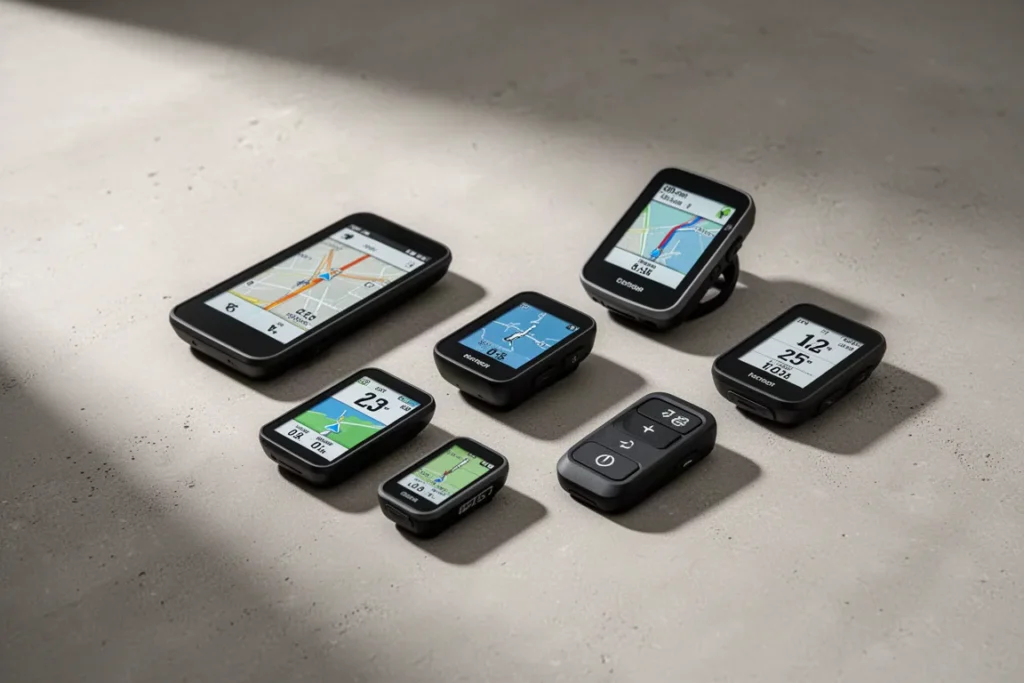
A high-quality GPS bike computer is essential for tracking cycling performance, navigating routes, and monitoring important ride data. Many GPS bike computers promise accurate positioning, long battery life, and seamless connectivity, but finding a model that actually delivers reliable GPS tracking, a clear display, and consistent performance – without signal drops, difficult controls, or frequent charging – can be a challenge.
We compared 24 GPS bike computers, including models from Velonix, Garmin, Wahoo, Bryton, and iGPSPORT. The top 5 were evaluated based on the following criteria:
GPS Accuracy & Reliability
A GPS bike computer should accurately track speed, distance, and cycling routes. We evaluated satellite positioning technology, GPS signal stability, and tracking capabilities to identify models designed to deliver reliable ride data across different cycling environments.
Display Quality & Visibility
A clear, easy-to-read display is essential when cycling in bright sunlight or low-light conditions. We compared screen size, contrast, backlighting, and readability to find bike computers that make important ride information easy to see at a glance.
Battery Life & Endurance
Long rides require dependable battery performance. We compared advertised battery life, charging convenience, and power-saving capabilities to identify GPS bike computers suited for daily commutes, extended training sessions, and long-distance adventures.
Performance Tracking & Sensor Compatibility
A good GPS bike computer should do more than display speed and distance. We evaluated support for cycling metrics such as cadence, heart rate, elevation, and power, along with compatibility with external sensors for more detailed performance monitoring.
Smart Features & Connectivity
Modern GPS bike computers offer features such as Bluetooth connectivity, smartphone app integration, automatic ride synchronization, and compatibility with platforms like Strava. We compared these capabilities to identify models that make recording, analyzing, and sharing cycling activities more convenient.
After comparing 24 GPS bike computers, we narrowed down the five most promising options for cyclists in 2026.

With 22 years of experience in cycling technology, Robert has extensive knowledge of GPS bike computers and cycling accessories. In this review, he compares several models to identify the most reliable options for GPS accuracy, battery life, and performance tracking.

OVERALL ANALYSIS
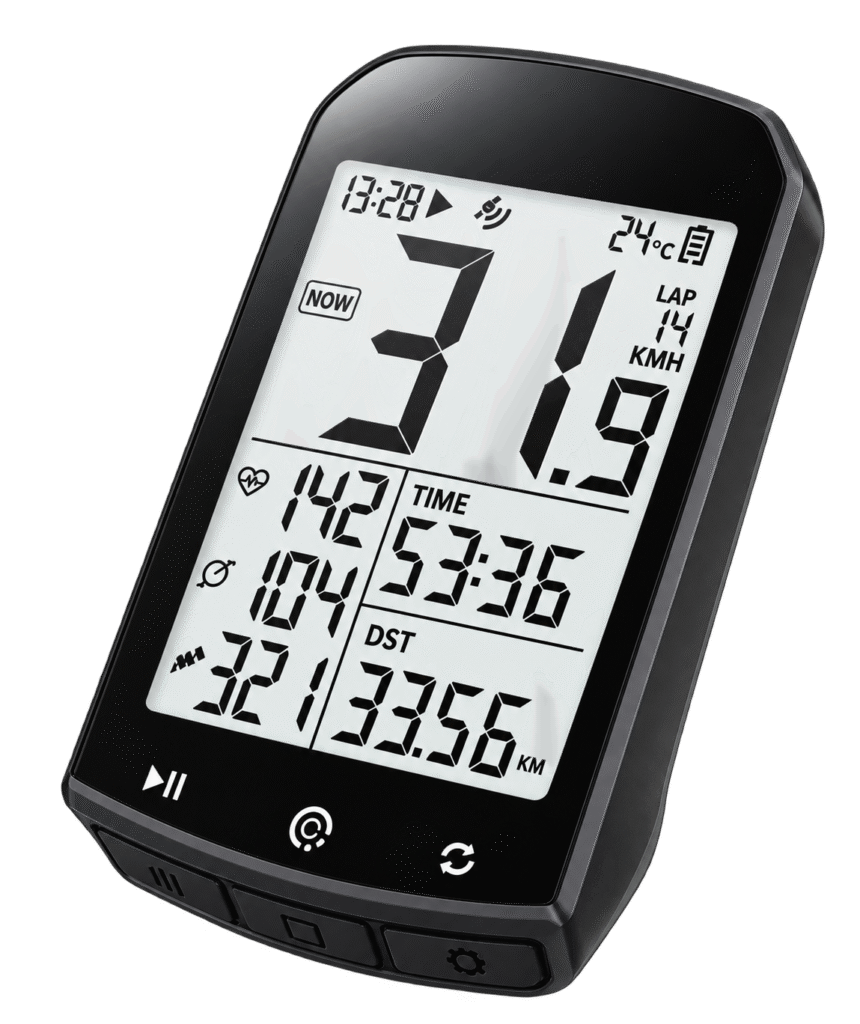
The Velonix GPS Bike Computer stands out as our #1 choice for 2026 thanks to its impressive combination of accurate GPS tracking, extended battery life, and easy-to-read display.
The first thing that makes Velonix stand out is its large 2.9-inch high-contrast display, designed to keep important cycling information clearly visible even in bright sunlight. Whether you’re monitoring speed, distance, ride time, or heart rate, the screen makes it easy to check your performance at a glance without constantly looking down at your phone.
One of its biggest advantages is the advanced multi-satellite GPS system. Velonix supports GPS, GLONASS, Galileo, and BeiDou, helping deliver dependable positioning and accurate ride tracking across different cycling environments.
What really sets Velonix apart, though, is its 30+ hour battery life.
Unlike smartphones that can quickly drain their batteries when running GPS tracking apps, Velonix is designed to handle long-distance rides, extended training sessions, and multi-day cycling adventures on a single charge. This means less time worrying about battery levels and more time focusing on the road ahead.
Another feature we particularly like is its Strava synchronization through the companion app. Instead of manually recording your cycling sessions or transferring ride data, you can sync your activities to Strava and conveniently review your cycling performance, distance, and progress over time.
Velonix also supports heart rate, cadence, and power sensors, making it an appealing option for cyclists who want more than basic speed and distance tracking.
By connecting compatible external sensors, riders can monitor additional performance metrics, better understand their training intensity, and track improvements across different rides.
The automatic backlight is another practical advantage. Whether you’re cycling early in the morning, riding through shaded areas, or heading home after sunset, the display is designed to remain readable without constantly adjusting brightness settings.
Weather resistance is equally important for a dependable bike computer, and Velonix delivers with its IPX6 water-resistant construction.
This means it’s designed to withstand heavy rain, splashes, sweat, and challenging outdoor riding conditions, making it suitable for cyclists who don’t want unpredictable weather to interrupt their training.
Another major benefit is its simple, phone-free operation.
Instead of mounting an expensive smartphone on your handlebars and exposing it to vibrations, rain, or accidental drops, Velonix gives you a dedicated cycling display with physical buttons that can be operated even while wearing gloves.
This keeps your phone safely tucked away while allowing you to monitor your essential ride statistics.
Overall, Velonix combines multi-satellite GPS tracking, a large sunlight-readable display, 30+ hour battery life, Strava connectivity, advanced sensor compatibility, and reliable weather resistance in one compact GPS bike computer.
For cyclists who want dependable everyday ride tracking without relying on their smartphones, Velonix earns our top recommendation for 2026.
Pros
- 30+ Hour Battery Life for extended cycling adventures
- Advanced Multi-Satellite GPS for accurate ride tracking
- Large 2.9-Inch High-Contrast Display for easy readability
- Sunlight-Readable Screen for clear visibility outdoors
- Strava Synchronization to track and analyze cycling performance
- Heart Rate Sensor Compatibility for fitness monitoring
- Cadence & Power Sensor Support for advanced training insights
- IPX6 Water Resistance for dependable use in rainy conditions
- Automatic Backlight for improved visibility in low light
- Phone-Free Ride Tracking to preserve smartphone battery
- Easy-to-Use Physical Buttons for convenient operation
- Compact & Lightweight Design for a clean handlebar setup
Cons
- Often out of stock due to high demand
- Only available through the official website
CONCLUSION
Velonix GPS Bike Computer offers excellent value for cyclists looking for advanced technology without the premium price tag, combining multi-satellite GPS tracking, 30+ hour battery life, a sunlight-readable display, and seamless Strava connectivity in one compact device.
With its combination of accurate ride tracking, advanced performance monitoring, impressive battery endurance, and weather-resistant construction, Velonix is designed to make every cycling adventure easier and more enjoyable.
For riders seeking a reliable, feature-packed GPS bike computer without depending on their smartphone, Velonix is our top pick for the best GPS bike computer of 2026.
2. Garmin Edge 540 GPS Cycling Computer
OVERALL ANALYSIS
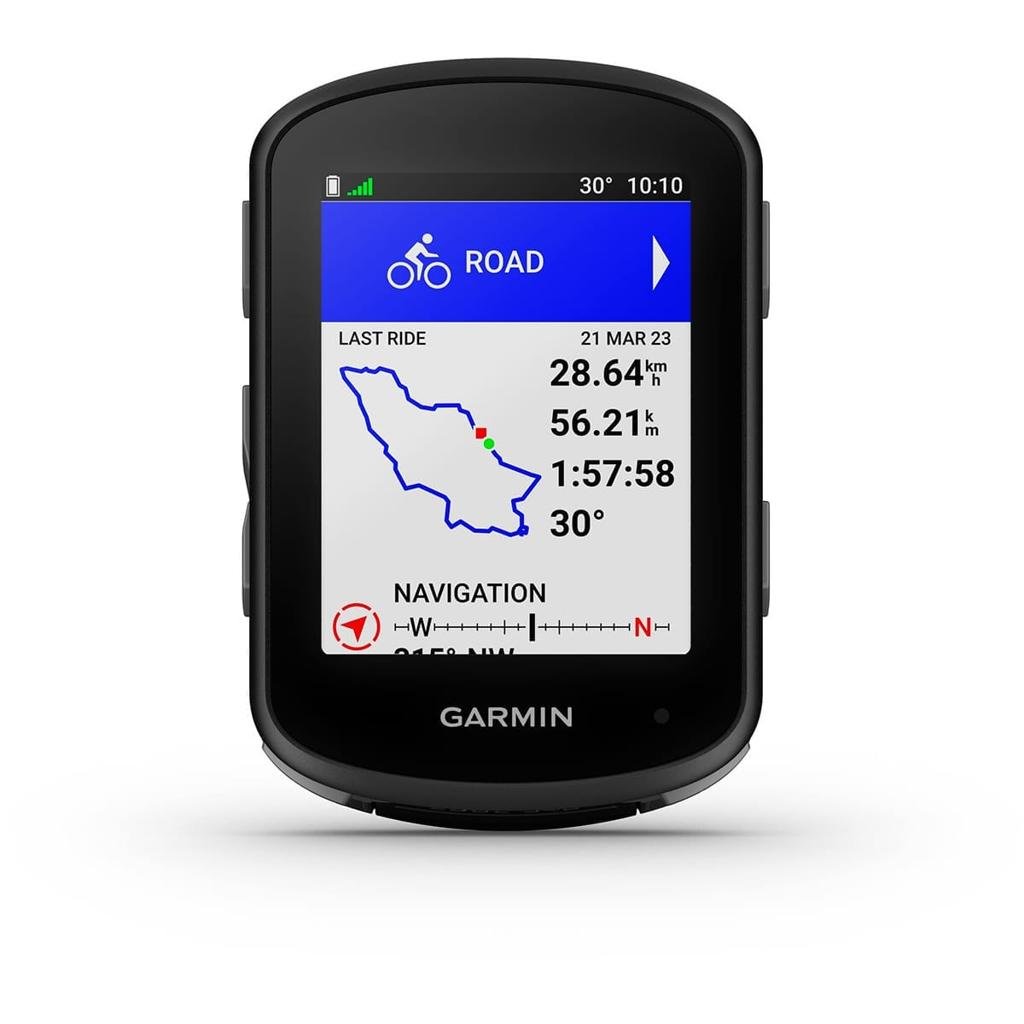
The Garmin Edge 540 is a feature-rich GPS cycling computer designed for riders who want detailed performance tracking, reliable navigation, and advanced training tools. Its 2.6-inch color display presents cycling metrics, route information, and navigation instructions, while its physical-button interface allows operation in wet conditions or while wearing gloves.
One of its strongest features is multi-band GNSS positioning, which improves location tracking in challenging environments such as dense forests, narrow streets, and urban areas with tall buildings. The Edge 540 also includes ClimbPro ascent planning, allowing cyclists to monitor upcoming climbs, gradients, and remaining elevation, alongside training tools that help riders manage their effort throughout demanding sessions.
Battery performance is respectable, with up to 26 hours of operation, while ANT+, Bluetooth, and WiFi connectivity provide integration with compatible sensors, smartphones, and cycling accessories.
The main compromises are its lack of a touchscreen, relatively compact display, and a feature-heavy interface that may require some familiarization. For dedicated cyclists who prioritize advanced training analysis and detailed navigation, the Garmin Edge 540 remains a capable and comprehensive option.
Pros
- Multi-Band GNSS for accurate GPS positioning
- 2.6-inch color display with detailed cycling maps
- Up to 26 hours of battery life
- Advanced training metrics and ClimbPro technology
- ANT+, Bluetooth, and WiFi connectivity
Cons
- No touchscreen functionality
- Button-based navigation can take time to master
3.Wahoo ELEMNT ROAM V2 GPS Bike Computer
OVERALL ANALYSIS
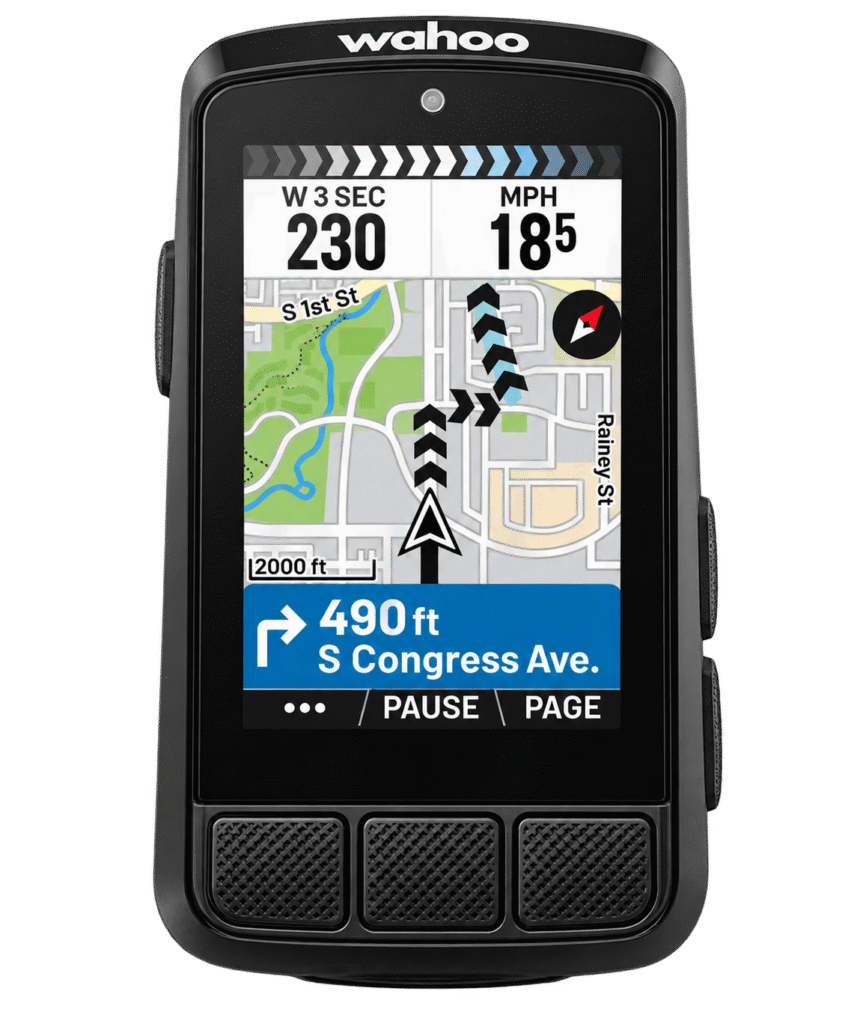
The Wahoo ELEMNT ROAM V2 combines dependable GPS tracking with practical navigation features, making it an appealing option for cyclists who frequently explore unfamiliar routes. Its 2.7-inch color display presents maps, cycling statistics, and navigation instructions, while dedicated physical buttons allow riders to interact with the device without relying on touchscreen controls.
The ROAM V2 features dual-band GPS technology, designed to improve positioning in challenging environments where satellite signals may be obstructed. Its navigation system includes turn-by-turn directions, on-device route creation, and downloadable maps, helping cyclists follow planned routes and find their way through unfamiliar areas.
Connectivity is another strength. The device supports ANT+ and Bluetooth sensors, allowing riders to connect compatible heart rate monitors, cadence sensors, and power meters. Its companion app also supports device customization and ride-data management, while IPX7 water resistance provides additional protection during wet-weather cycling.
The biggest limitation is battery endurance. With up to 17 hours of battery life, the ROAM V2 may require more frequent charging than longer-lasting alternatives. It also lacks a touchscreen, and certain configuration tasks depend on the companion app. Nevertheless, its combination of accurate positioning, useful navigation features, and cycling-focused controls makes it a strong option for regular riders.
Pros
- Dual-band GPS for improved location accuracy
- 2.7-inch color display with navigation maps
- Turn-by-turn navigation and on-device routing
- ANT+ and Bluetooth sensor compatibility
Cons
- Up to 17 hours of battery life
- No touchscreen functionality
- Smaller screen than larger navigation-focused models
4. Bryton Rider 750 SE GPS Bike Computer
OVERALL ANALYSIS
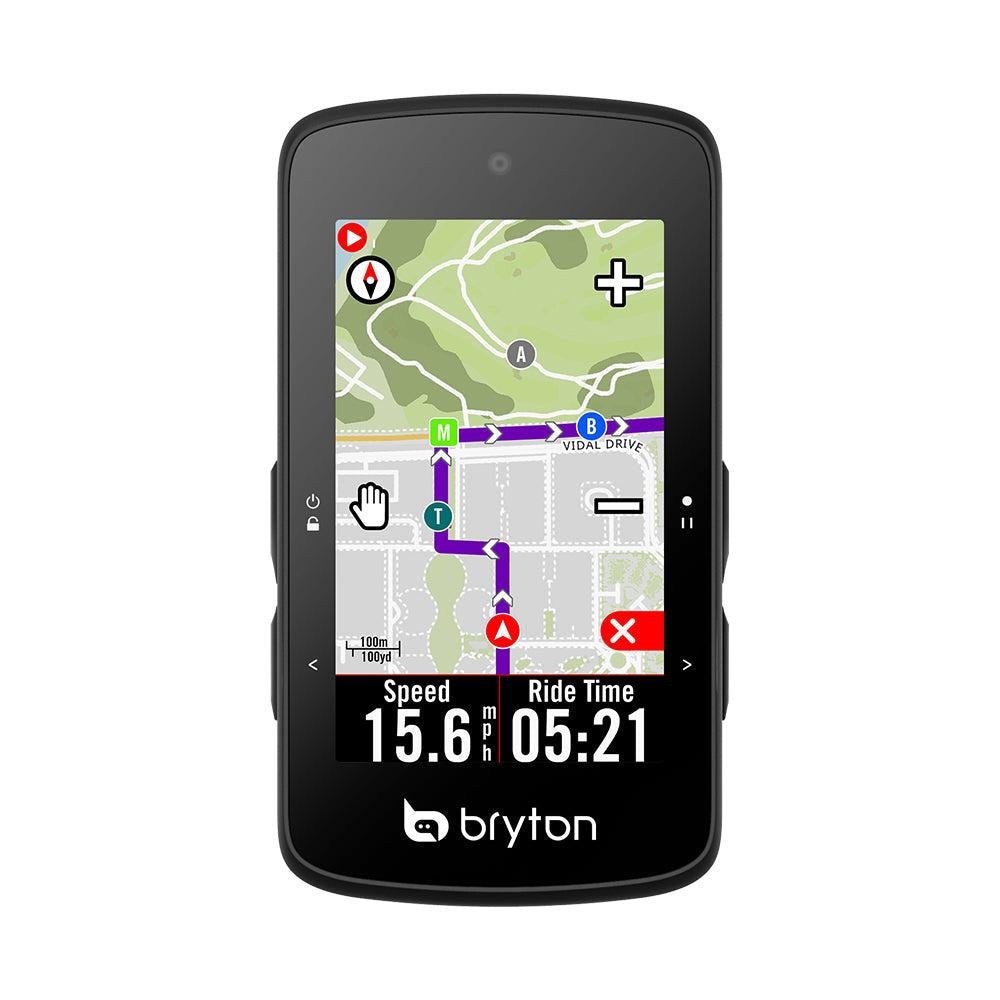
The Bryton Rider 750 SE is a navigation-focused GPS cycling computer that combines a 2.8-inch color touchscreen with an impressive advertised battery life of up to 40 hours. Designed for cyclists who regularly tackle extended routes, it offers a large display for monitoring speed, distance, elevation, and navigation information without constantly switching between screens.
Navigation is one of its biggest strengths. The Rider 750 SE features preloaded OpenStreetMap maps, turn-by-turn directions, on-device rerouting, and voice search, providing useful tools for exploring unfamiliar destinations. Its Climb Challenge feature also displays upcoming ascents and elevation information, making it especially appealing to cyclists training on hilly routes.
The device supports ANT+ heart rate, speed, cadence, and power sensors, along with compatible radar accessories and electronic shifting systems. Bluetooth connectivity and activity synchronization add convenience, while customizable data pages allow riders to prioritize the statistics most relevant to their training.
Its compromises primarily involve ease of use. Voice search requires internet access, some route-management features involve the Bryton Active app, and the touchscreen may be less convenient than dedicated buttons when wearing thicker gloves. However, for cyclists seeking extended battery endurance, detailed mapping, and comprehensive training functionality, the Rider 750 SE offers an appealing combination of features.
Pros
- Large 2.8-inch color touchscreen
- Up to 40 hours of battery life
- Turn-by-turn navigation with on-device rerouting
- Voice search for finding destinations
Cons
- Voice search requires an internet connection
- Touchscreen can be less convenient with gloves
- Larger body than some compact GPS bike computers
5. iGPSPORT BSC300T GPS Bike Computer
OVERALL ANALYSIS
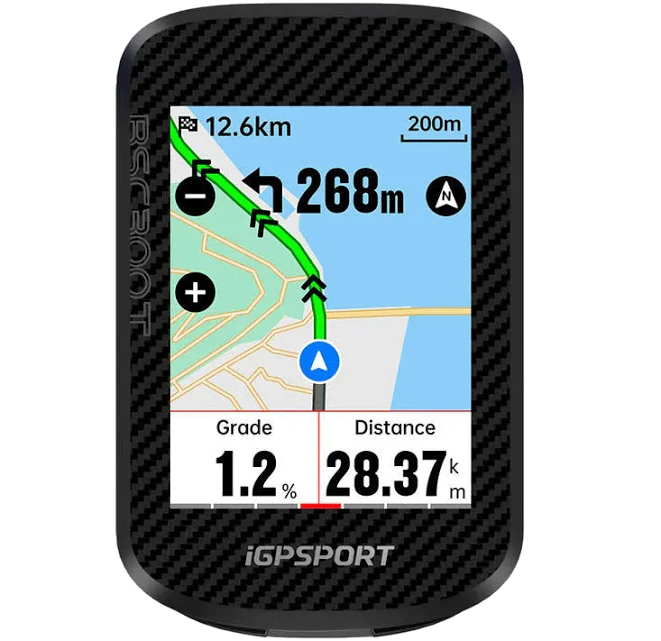
The iGPSPORT BSC300T is a compact GPS cycling computer designed to balance everyday ride tracking with practical navigation and training features. Its 2.4-inch color touchscreen provides access to speed, distance, elevation, and other cycling metrics, while dedicated physical buttons offer an alternative way to operate the device during rides.
One of its strongest features is its five-satellite positioning system, which supports GPS, BeiDou, GLONASS, Galileo, and QZSS for location tracking across different environments. The device also includes color-map navigation, turn-by-turn guidance, and off-course alerts, helping riders follow planned routes and stay informed about upcoming turns.
The BSC300T supports more than 130 cycling data metrics, alongside compatible heart rate monitors, cadence sensors, speed sensors, and power meters. Its ANT+ and Bluetooth connectivity expands its training capabilities, while integration with platforms such as Strava, TrainingPeaks, and Komoot allows riders to synchronize activities and review their performance.
The main compromises are its relatively small 2.4-inch screen and advertised 20-hour battery life, which may be limiting for cyclists who prefer larger navigation displays or extended multi-day riding. It also lacks automatic brightness adjustment, offline automatic rerouting, and automatic climb detection. Overall, the BSC300T is a capable compact GPS computer for riders who want detailed cycling metrics and practical navigation without an unnecessarily complicated device.
Pros
- Compact 2.4-inch color touchscreen
- Five-satellite GPS positioning support
- Up to 20 hours of battery life
Cons
- Smaller display than many competing GPS computers
- Shorter battery life than some endurance-focused models
- No automatic brightness adjustment
WHAT IS A GPS Bike Computer?
A GPS bike computer is a compact electronic device mounted on a bicycle’s handlebars that uses satellite technology to track cycling speed, distance, routes, and ride time. Unlike smartphones, GPS bike computers are specifically designed for cycling, offering longer battery life, easy-to-read displays, and advanced performance tracking without draining your phone’s battery.
Benefits of a GPS Bike Computer
- Accurate GPS Speed & Distance Tracking
- Navigate Routes Without Your Phone
- Monitor Heart Rate, Cadence & Power
- Track Cycling Performance & Progress
- Extended Battery Life for Long Rides
- Easy-to-Read Display in Bright Sunlight
- Weather-Resistant for Outdoor Cycling
- Easy to Install & Use
Things to Look for When Choosing the Best GPS Bike Computer
Accurate Multi-Satellite GPS
A reliable GPS bike computer should support multiple satellite systems, such as GPS, GLONASS, Galileo, and BeiDou. This helps improve positioning accuracy and ensures more dependable speed, distance, and route tracking, even when cycling through forests, mountains, or busy urban areas.
Long Battery Life (30+ Hours)
Battery life is one of the most important factors when choosing a GPS bike computer. Look for a device offering 30+ hours of battery life so you can enjoy long-distance rides, extended training sessions, and cycling adventures without constantly worrying about recharging.
Sunlight-Readable Display
A high-contrast screen is essential for checking cycling statistics while riding. Look for a large, easy-to-read display that remains clearly visible in bright sunlight and includes backlighting for early-morning or nighttime cycling.
Smart Connectivity & Performance Tracking
A good GPS bike computer should support Bluetooth connectivity, Strava synchronization, and compatible heart rate, cadence, and power sensors. These features allow you to monitor your cycling performance, analyze your progress, and improve your training without relying entirely on your smartphone.
Water Resistance & Warranty
Cycling computers should be built to withstand unpredictable outdoor conditions. Look for a weather-resistant design, preferably IPX6 or higher, along with a clear manufacturer warranty and reliable customer support. This helps protect your investment and provides greater peace of mind during everyday rides.
What to Avoid When Choosing a GPS Bike Computer
Poor GPS Accuracy
Some basic cycling computers struggle to maintain accurate GPS tracking, especially in areas with tall buildings, dense forests, or challenging terrain. Avoid devices with unreliable satellite positioning, as inaccurate speed, distance, and route data can make it difficult to track your cycling performance.
Short Battery Life & Complicated Setup
A GPS bike computer with poor battery endurance can leave you without ride data halfway through a long journey. Some models also require complicated installation, frequent smartphone connections, or confusing settings. Look for devices with dependable battery life, simple mounting systems, and easy-to-use controls.
Cheap, Unreliable Knockoffs
Be cautious of unbranded GPS bike computers that promise advanced features but provide little information about GPS accuracy, water resistance, sensor compatibility, or customer support. Poor build quality and unreliable software can lead to frustrating performance issues. Choose a device with clearly documented specifications, dependable construction, and a reliable warranty.
With 22 years of experience in cycling technology, Robert has extensive knowledge of GPS bike computers and cycling accessories. In this review, he compares several models to identify the most reliable options for GPS accuracy, battery life, and performance tracking.
Copyright © 2026 All Rights Reserved.
The listings featured on this site are from companies from which this site receives compensation. This influences where, how and in what order such listings appear on this site.
Designed to help users make confident decisions online, this website contains information about a wide range of products and services. Certain details, including but not limited to prices and special offers, are provided to us directly from our partners and are dynamic and subject to change at any time without prior notice. Though based on meticulous research, the information we share does not constitute legal or professional advice or forecast, and should not be treated as such.
Reproduction in whole or in part is strictly prohibited.
As an Amazon Associate we earn from qualifying purchases.