
We Tested 24 Schumann Resonance Generators Over the Past 3 Weeks to Find the Most Reliable Option of 2026.
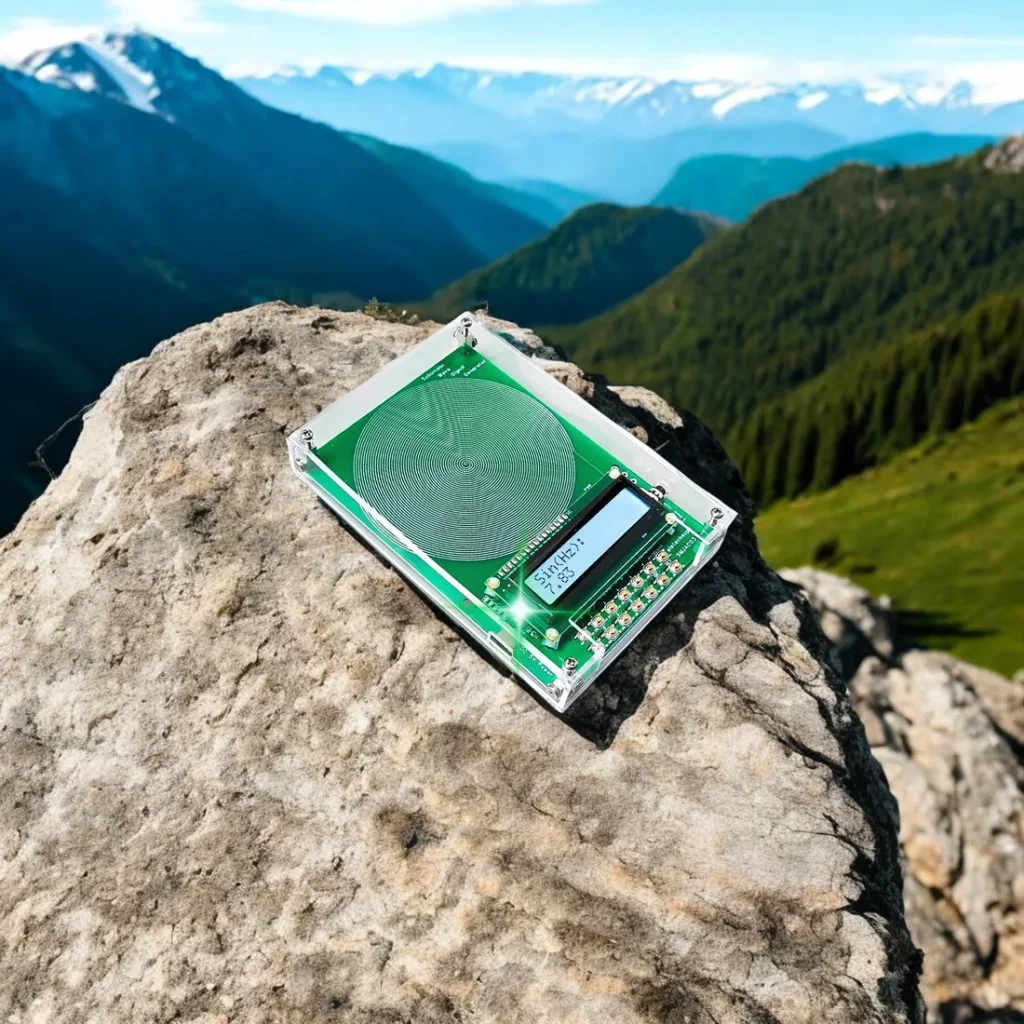
A high-quality Schumann resonance generator should provide a stable, precise frequency output while remaining simple enough to use as part of your daily relaxation, meditation, focus, or bedtime routine. Many devices promise accurate 7.83Hz output and broad frequency control, but finding one that actually delivers consistent signal stability, intuitive controls, flexible settings, and dependable build quality can be surprisingly difficult.
We tested 24 Schumann resonance generators, comparing everything from basic 7.83Hz devices to more advanced adjustable-frequency models. The top 5 were evaluated based on the following criteria:
Frequency Accuracy & Stability
A reliable generator should maintain a consistent output without unwanted fluctuations. We compared frequency precision, signal stability, and overall consistency during extended use.
Frequency Range & Adjustability
While 7.83Hz is the best-known Schumann resonance frequency, adjustable models offer considerably more flexibility. We looked at how easily each device could move between frequencies and how much control it gave the user.
Ease of Use
A good frequency generator should not require complicated setup. We evaluated displays, controls, preset accessibility, adjustment speed, and how easy each model was to operate for first-time users.
Output Options & Versatility
Different generators use different output methods and connections. We compared features such as coil-based operation, sine-wave output, headphone or speaker connectivity, and compatibility with different relaxation and meditation setups.
Build Quality & Everyday Convenience
We also assessed construction, portability, power requirements, display readability, and whether each device was practical enough for regular use at a bedside, desk, meditation space, or while travelling.
After three weeks of testing, we narrowed the field down to the five Schumann resonance generators that offered the strongest overall combination of precision, usability, versatility, and reliability.

With 22 years of experience in frequency technology and electronic devices, Robert has extensive knowledge of signal generators and resonance-based equipment. In this review, he tested several Schumann resonance generators to identify the most precise, reliable, and user-friendly models.

OVERALL ANALYSIS
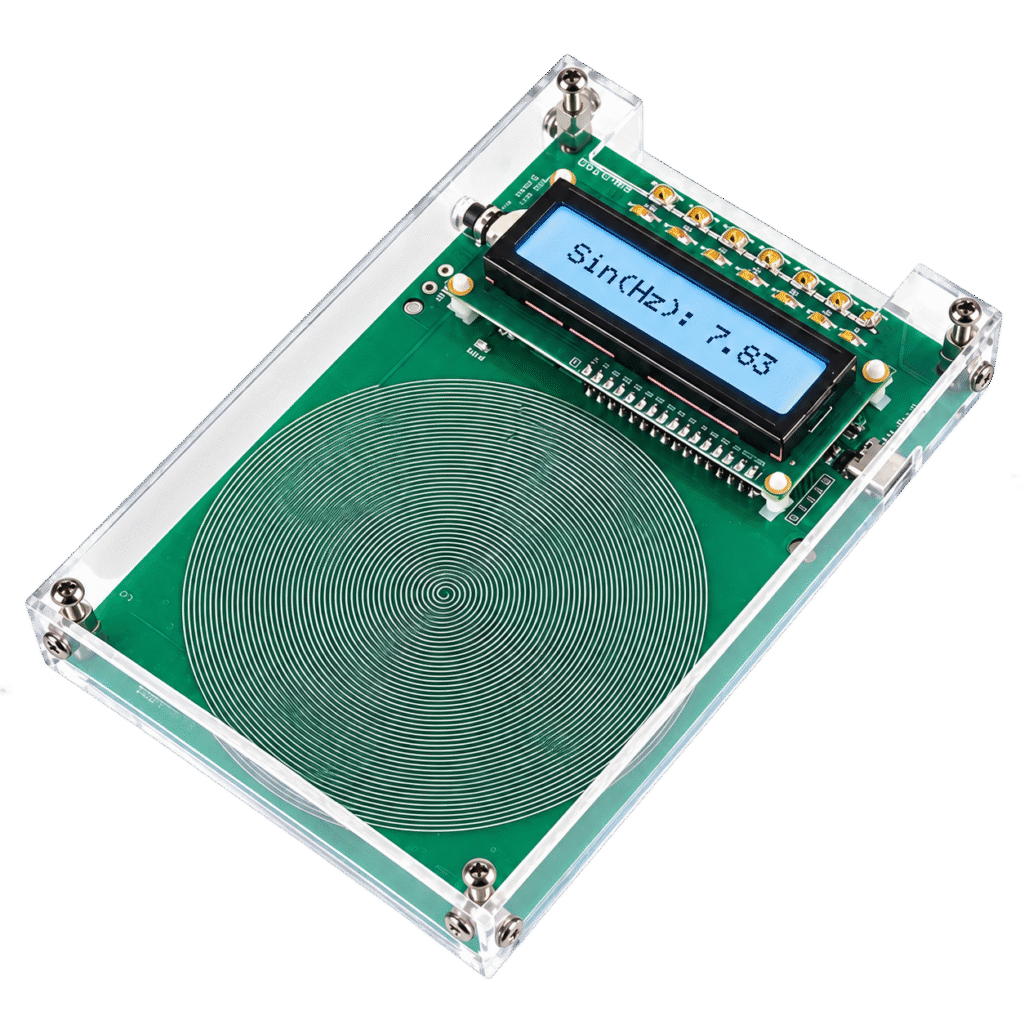
Resonara 7.83Hz Schumann Resonance Generator is by far our favorite choice on the market.
The first thing that makes it stand out is its dedicated 7.83Hz Schumann resonance output, allowing users to quickly select the best-known Schumann frequency without having to manually configure complicated settings.
What really impressed us, though, is the level of frequency control. Resonara offers an adjustable range from 0.01Hz all the way up to 100kHz, giving it significantly more flexibility than basic generators that are limited to a single preset frequency.
Precision is another major strength.
Resonara uses a crystal oscillator combined with a high-precision DAC, helping maintain a stable and consistent sine-wave output during extended sessions. For a device built around precise frequency generation, this is one of the features we consider particularly important.
It also includes a spiral copper coil output system.
This allows the device to operate silently without requiring external speakers, making it convenient for use on a desk, beside the bed, or during meditation and relaxation routines without adding distracting background noise.
One of our favorite features is the built-in LCD display and keypad controls. Instead of relying on a smartphone app, Resonara lets you view and adjust your frequency directly from the device, making it easy to switch settings whenever you want.
For users who prefer audible output, Resonara also includes a 3.5mm audio connection, allowing compatible headphones or speakers to be connected directly to the generator.
Another major advantage is how straightforward it is to use.
The device is USB powered, so there is no complicated installation process or specialist equipment required. Connect the power source, select the frequency you want, and the generator is ready for use.
Its compact design also means it doesn’t require much space. It can comfortably sit on a bedside table, work desk, meditation area, or other dedicated relaxation space, while the transparent enclosure keeps the controls and internal coil clearly visible.
Overall, Resonara combines dedicated 7.83Hz operation, an extensive 0.01Hz–100kHz adjustable range, crystal-oscillator precision, silent coil operation, direct controls, and multiple output options in one compact device. For anyone looking for a versatile Schumann resonance generator without an overly complicated setup, Resonara was our standout choice.
Pros
- Dedicated 7.83Hz Schumann resonance preset
- Wide 0.01Hz–100kHz adjustable frequency range
- Crystal oscillator for stable frequency generation
- High-precision DAC sine-wave output
- Silent spiral copper coil operation
- Built-in LCD display
- Simple keypad frequency controls
- 3.5mm audio output for compatible headphones or speakers
- Works without a phone or app
- Convenient USB-powered design
- Compact enough for desk or bedside use
- Easy setup with no complicated installation
Cons
- Often out of stock due to high demand
- Only available through the official website
CONCLUSION
Resonara 7.83Hz Schumann Resonance Generator is reasonably priced for a versatile frequency generator packed with advanced features, including dedicated 7.83Hz output, an adjustable 0.01Hz–100kHz frequency range, crystal-oscillator precision, and silent coil operation. Take advantage of the limited-time discount while supplies last.
Resonara also comes with a money-back guarantee and free shipping, giving you extra peace of mind when ordering.
With its combination of precise frequency control, stable sine-wave output, straightforward controls, and versatile output options, Resonara was our clear choice for the best Schumann resonance generator of 2026.
2. Eletechsup SMECN04 Schumann Resonance Generator
OVERALL ANALYSIS
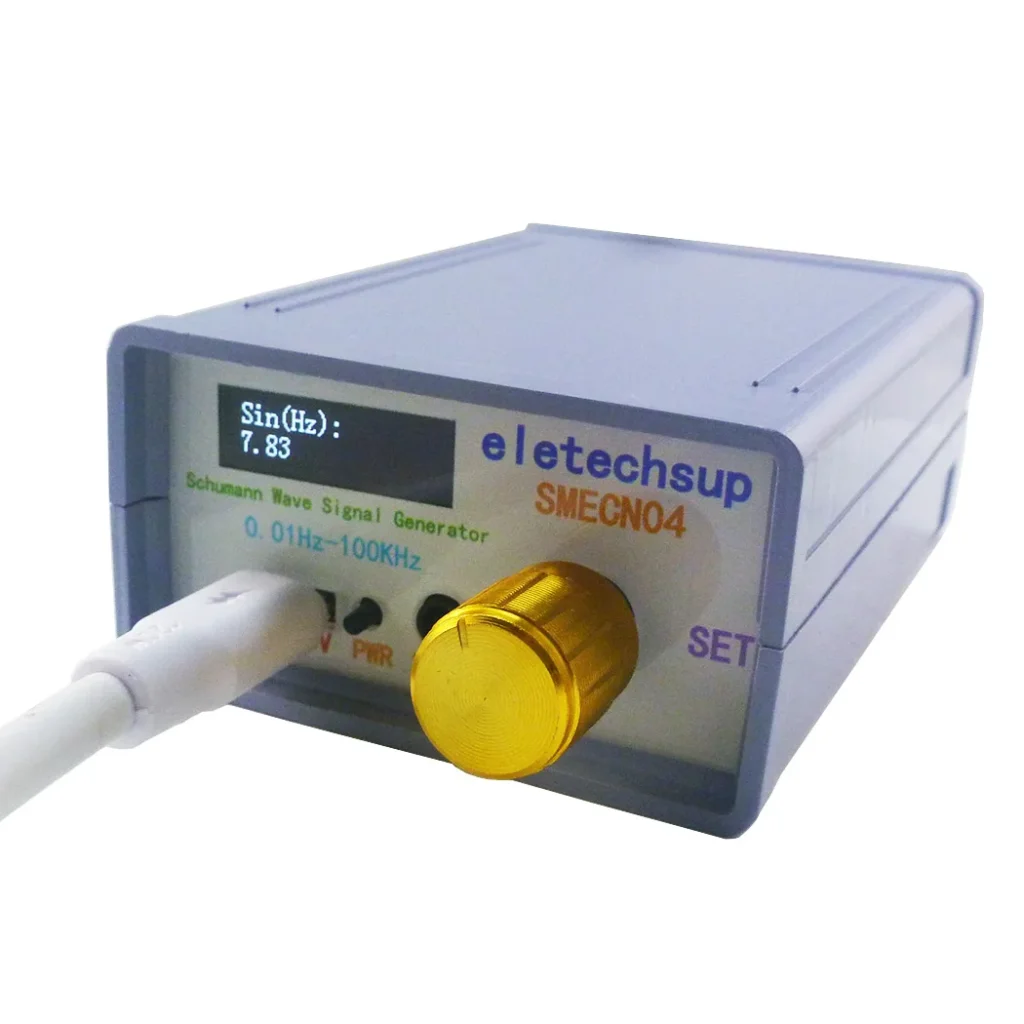
The Eletechsup SMECN04 is one of the more compact Schumann resonance generators in our comparison and is a strong alternative for users who want extensive frequency adjustment without a large exposed circuit board.
It starts at the familiar 7.83Hz setting, but its biggest advantage is the ability to adjust the output anywhere from 0.01Hz to 100kHz. Frequency control is handled through a rotary encoder, with increasingly larger adjustment steps as you move higher through the available range.
The device also produces a pure sine-wave signal and includes a 3.5mm output, giving advanced users another way to work with the generated signal. We also like that Eletechsup has placed the electronics inside a compact enclosure rather than leaving the circuit board completely exposed.
Operation is straightforward, although the tiny OLED display and encoder-based controls aren’t as convenient as the larger screens and numeric keypads found on some competitors. There is also no internal battery, so it needs to remain connected to a USB-C power source.
Overall, the SMECN04 is a compact and capable option with excellent frequency flexibility. Its controls are slightly less convenient than our top choice, but it remains one of the stronger alternatives for users who value a smaller footprint.
Pros
- Dedicated 7.83Hz default frequency
- Wide 0.01Hz–100kHz adjustable range
- Compact enclosed design
- 3.5mm signal output
- Convenient USB-C power
Cons
- Small 0.91-inch OLED display
- Rotary encoder is slower than a full numeric keypad
3. Eletechsup SMLDC02 Schumann Resonance Generator
OVERALL ANALYSIS
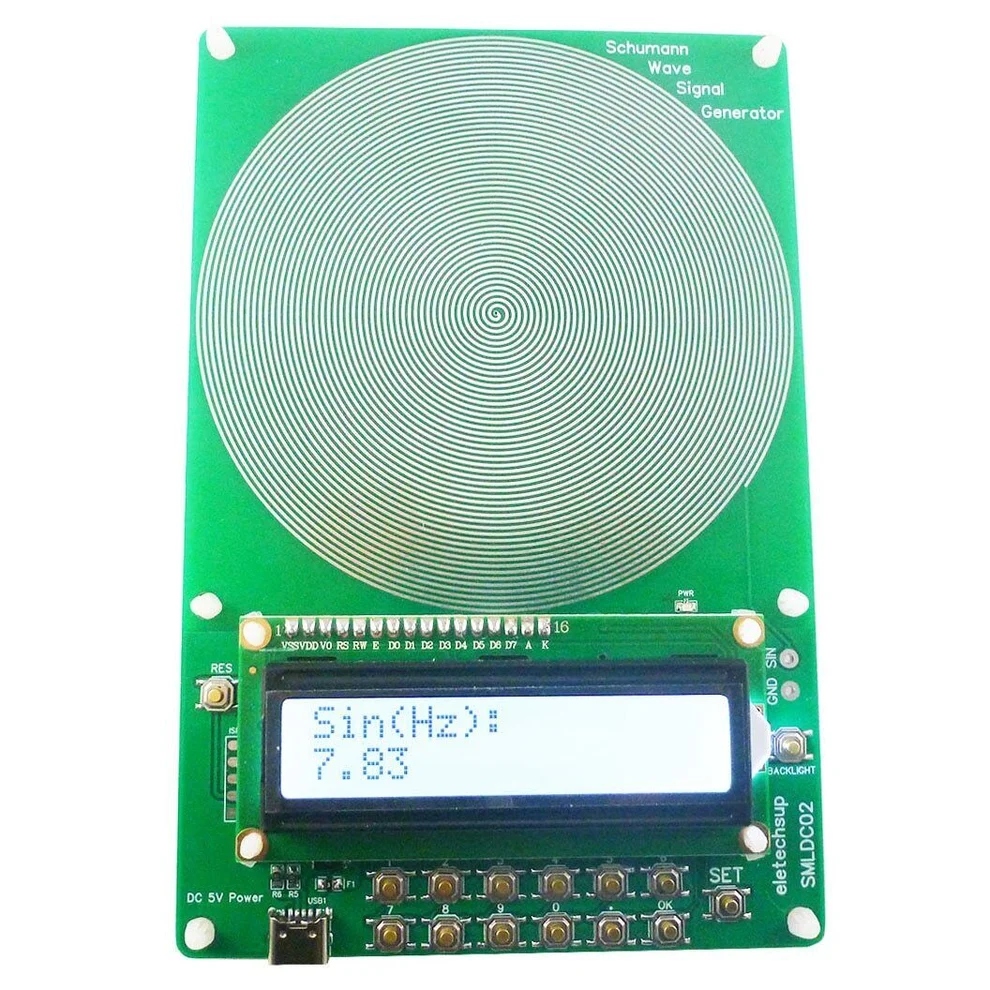
The Eletechsup SMLDC02 takes a more traditional approach to frequency generation, using a relatively large circuit-board layout with a dedicated LCD screen and full numeric keypad.
Its major strength is control. Instead of repeatedly rotating a dial, you can simply enter your desired frequency directly into the keypad and confirm it. The device supports frequencies from 0.01Hz through 100kHz, while automatically starting at 7.83Hz when powered on.
Another useful feature is its dual power-input design. It can operate from USB-C or a compatible DC input, giving users more flexibility when integrating it into a permanent desk or room setup. There is also an optional power-off storage function that can preserve your selected parameters between sessions.
The biggest compromise is physical design. The SMLDC02 has more of a laboratory-style appearance than a finished consumer device, and its comparatively large exposed circuit board takes up more space than compact enclosed generators.
Overall, the SMLDC02 is particularly good for users who prioritise direct frequency entry and straightforward controls. It offers plenty of adjustment flexibility, although its larger and more technical-looking design keeps it behind our top choices.
Pros
- 0.01Hz–100kHz frequency adjustment
- Defaults automatically to 7.83Hz
- Large numeric keypad
- Clear LCD display
Cons
- Larger exposed-board design
- No built-in battery
- USB-C cable is not included according to the manual
4. OPUYYM 7.83Hz Schumann Resonance Generator
OVERALL ANALYSIS
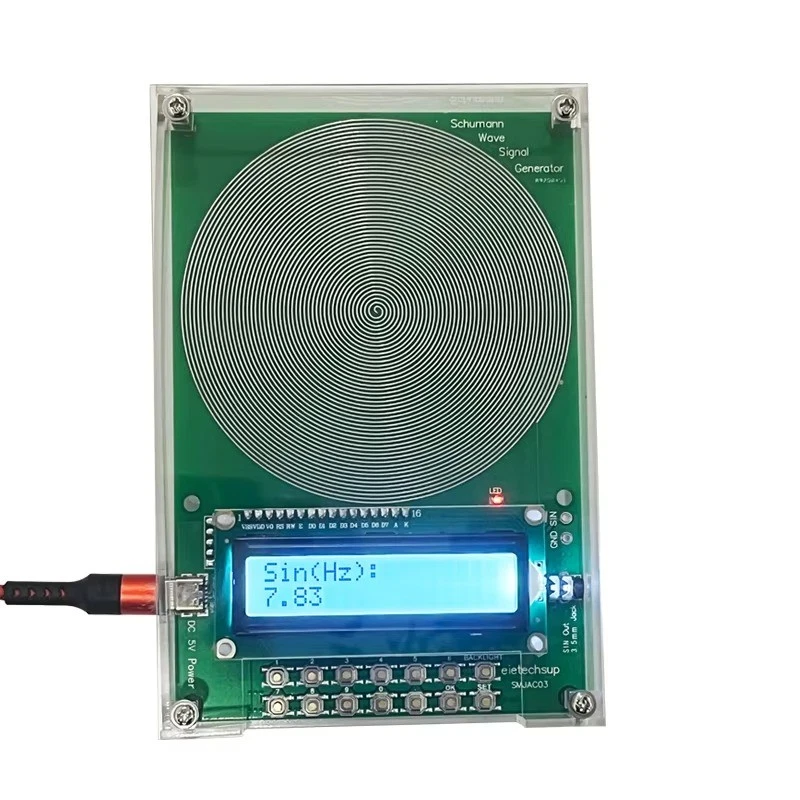
The OPUYYM 7.83Hz Schumann Resonance Generator offers a familiar layout for anyone who prefers hands-on control over frequencies rather than relying on presets or smartphone software.
Once powered on, the unit defaults to 7.83Hz, while the built-in keypad lets you manually enter frequencies anywhere between 0.01Hz and 100,000Hz. A dedicated LCD displays the active setting, and separate SET, OK and reset controls make changing frequencies relatively straightforward.
OPUYYM also includes a 3.5mm output connection as well as a signal-test interface, which makes the device more interesting for users who want to experiment with or verify the generated output using additional equipment. Power comes through a standard 5V USB-C connection.
Where it falls behind some of the more polished options is presentation. Depending on which version you choose, the device may use an exposed-board or acrylic-case construction, and the LCD interface is functional rather than particularly modern.
Overall, the OPUYYM offers plenty of frequency control and a straightforward interface, making it a capable choice for users who care more about functionality than premium exterior design.
Pros
- Dedicated 7.83Hz startup frequency
- Adjustable from 0.01Hz–100kHz
- Full numeric keypad
Cons
- No internal rechargeable battery
- Basic LCD interface
- Acrylic enclosure depends on the version selected
5. Rihveo 7.83Hz Schumann Resonance Generator
OVERALL ANALYSIS
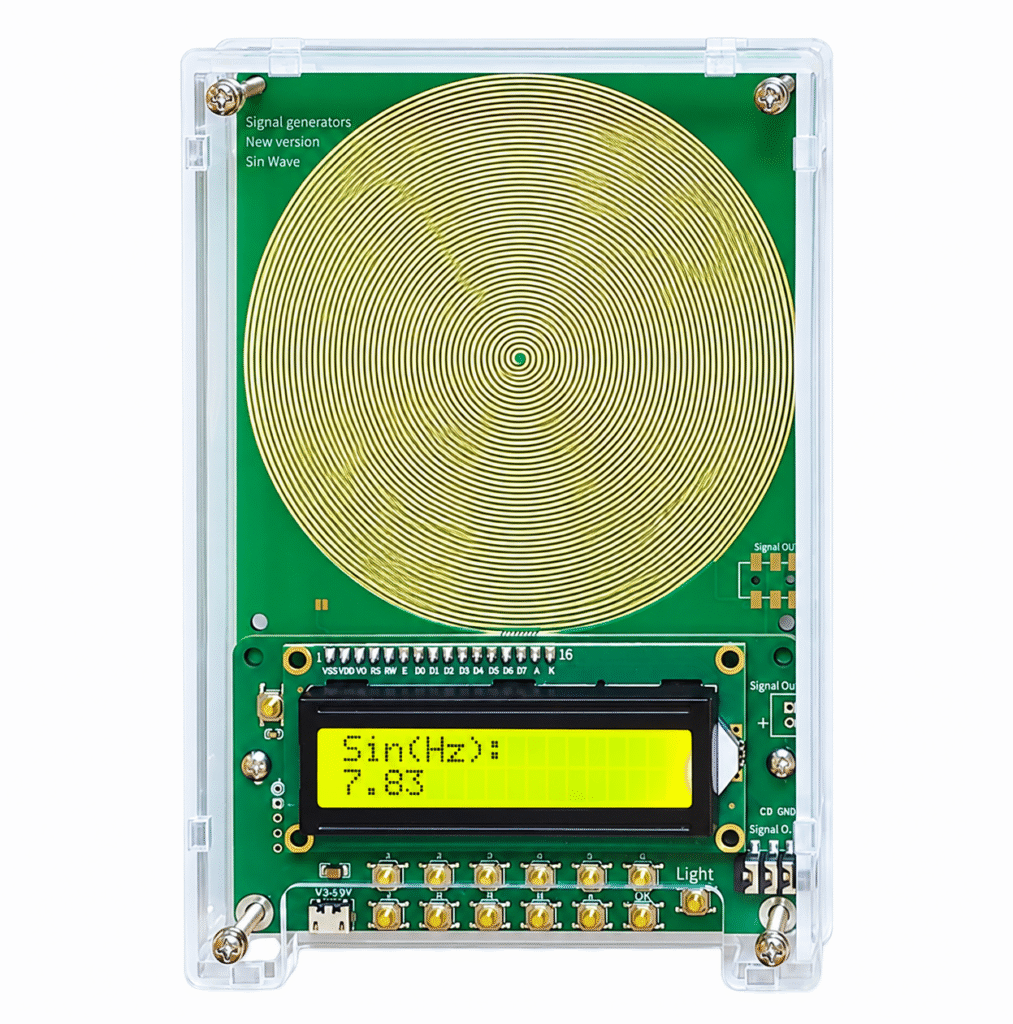
The Rihveo 7.83Hz Schumann Resonance Generator stands out primarily because of its unusually broad adjustable frequency range. Instead of stopping at 100kHz like many competing models, Rihveo allows adjustment from 0.01Hz all the way to 299,999Hz.
It starts at 7.83Hz and uses a keypad-based interface, so entering a specific frequency is simple. Once you’ve selected the number you want, pressing the OK button activates the new setting. A built-in indicator also provides visual confirmation that a signal is being generated.
Rihveo also includes a 3.5mm output, and the documented package includes earphones that can be used to monitor the signal. The transparent acrylic housing provides some protection while still keeping the internal circuitry and large spiral element visible.
The main drawback is convenience. The documented RIH012 version uses Micro USB rather than USB-C, which feels dated compared with newer generators. The manufacturer documentation also notes that some portable power banks may shut themselves off because the generator consumes relatively little power.
Overall, Rihveo is an interesting choice for users who want an exceptionally broad frequency range and direct manual control. For straightforward everyday 7.83Hz operation, however, its extended range and more technical design may be more than most users actually need.
Pros
- Very wide 0.01Hz–299,999Hz range
- Starts at 7.83Hz
- Includes a protective acrylic enclosure
Cons
- No built-in battery
- Uses Micro USB rather than USB-C on the documented RIH012 model
- Acrylic construction feels more technical than premium
WHAT IS A Schumann Resonance Generator?
A Schumann resonance generator is an electronic device designed to produce a low-frequency signal, commonly centred around 7.83Hz, which corresponds to the fundamental Schumann resonance frequency measured in Earth’s electromagnetic environment. Many models also allow users to adjust the output across a much wider frequency range for meditation, relaxation, experimentation, or general frequency-generation purposes.
Benefits of a Schumann Resonance Generator
- Dedicated 7.83Hz Frequency Output
- May Complement Meditation & Relaxation Routines
- Helps Create a Calm, Screen-Free Environment
- Adjustable Frequencies on Advanced Models
- Silent Operation with Coil-Based Designs
- Easy to Use at Home or at a Desk
- Compact & Portable
- Simple USB-Powered Setup
Things to Look for When Choosing the Best Schumann Resonance Generator
Accurate 7.83Hz Output
The most important feature is a stable 7.83Hz setting, as this is the fundamental Schumann resonance frequency. Look for a generator designed to maintain consistent output rather than one with noticeable frequency drift.
Wide Adjustable Frequency Range
A broader frequency range gives you more flexibility beyond the standard 7.83Hz setting. Models offering something like 0.01Hz–100kHz or more are especially useful for users who want greater control and experimentation.
Stable Sine-Wave Signal
A high-quality generator should produce a clean and consistent sine-wave output. Crystal oscillators and precision DAC components can help improve frequency stability and signal accuracy.
Easy-to-Use Controls
Look for a clear display and straightforward controls. A numeric keypad or simple adjustment dial makes it much easier to change frequencies without complicated software or smartphone apps.
Warranty
A reliable brand should provide a warranty or money-back guarantee. This gives you the opportunity to test the device and return it if it does not meet your expectations.
What to Avoid When Choosing a Schumann Resonance Generator
Fixed Frequency With No Adjustment
Some generators are locked to a single frequency with no way to fine-tune the output. While 7.83Hz may be enough for basic use, an adjustable model gives you far more flexibility and control.
Unstable or Inaccurate Output
Avoid devices that provide little information about how the signal is generated or maintained. Poor-quality components can lead to inconsistent frequency output, which defeats the purpose of using a precision frequency generator.
Complicated Controls
A generator should be easy to operate without constantly referring to a manual. Avoid models with confusing menus, unclear displays, or awkward frequency adjustment systems when simpler keypad or dial controls are available.
With 22 years of experience in frequency technology and electronic devices, Robert has extensive knowledge of signal generators and resonance-based equipment. In this review, he tested several Schumann resonance generators to identify the most precise, reliable, and user-friendly models.
Copyright © 2026 All Rights Reserved.
The listings featured on this site are from companies from which this site receives compensation. This influences where, how and in what order such listings appear on this site.
Designed to help users make confident decisions online, this website contains information about a wide range of products and services. Certain details, including but not limited to prices and special offers, are provided to us directly from our partners and are dynamic and subject to change at any time without prior notice. Though based on meticulous research, the information we share does not constitute legal or professional advice or forecast, and should not be treated as such.
Reproduction in whole or in part is strictly prohibited.
As an Amazon Associate we earn from qualifying purchases.